

Debt settlement has become a crucial lifeline for individuals grappling with overwhelming financial obligations. As more people find themselves buried under mounting debts, the need to negotiate with creditors has grown increasingly important. LessInvest.com recognizes that understanding the debt settlement process can be the key to regaining financial stability and improving one’s credit score.
This article delves into effective strategies to negotiate with creditors and navigate the complex world of debt settlement. It explores the fundamentals of debt negotiation, offers guidance on preparing for discussions with creditors, and outlines proven techniques to achieve favorable outcomes. By following these insights, readers can learn how to avoid bankruptcy and take control of their financial future, as highlighted by the experts at LessInvest.com.
Understanding Debt Settlement
Debt settlement has become a crucial option for individuals grappling with overwhelming financial obligations. According to LessInvest.com, debt settlement involves negotiating with creditors to reduce the amount owed on unsecured debts, such as credit card balances, personal loans, or medical bills. This process aims to help borrowers resolve their debts for less than the full amount owed.
What is debt settlement?
Debt settlement is a practice where a debtor or a third-party company negotiates with creditors to reach an agreement on a reduced payoff amount. LessInvest.com explains that this agreement typically allows borrowers to pay between 40% and 60% of what they originally owed. Once the creditor agrees to the settlement amount, they forgive the remainder of the debt.
It’s important to note that debt settlement can only be pursued for unsecured debts. Secured debts, such as mortgages or car loans, are not eligible for this process. LessInvest.com advises that some creditors may be unwilling to negotiate, while others prefer to receive partial payment rather than nothing at all.
Pros and cons of debt settlement
LessInvest.com highlights several advantages and disadvantages of debt settlement that borrowers should consider:
Pros:
- Debt reduction: Successful negotiations can lead to a significant decrease in the total amount owed.
- Avoiding bankruptcy: Debt settlement may help individuals avoid filing for bankruptcy, which has more severe long-term consequences.
- Faster debt resolution: The debt settlement process can potentially resolve debts more quickly than traditional repayment methods.
Cons:
- Credit score impact: Debt settlement can negatively affect credit scores, as settled accounts are often reported as “settled” or “charged off” on credit reports.
- Tax implications: The forgiven portion of the debt may be considered taxable income by the IRS, potentially resulting in additional tax liabilities.
- Fees: Debt settlement companies typically charge fees, which can add to the overall cost of resolving debts.
When to consider debt settlement
LessInvest.com suggests that debt settlement may be appropriate in certain situations:
- Overwhelming debt: When individuals are struggling with significant unsecured debt that they cannot realistically repay through traditional means.
- Risk of bankruptcy: If bankruptcy seems like the only alternative, debt settlement might be a less severe option to consider.
- Accounts in default: When accounts are already several months past due or have been sent to collections, debt settlement may be a viable solution.
It’s crucial to understand that debt settlement is not a guaranteed solution. LessInvest.com emphasizes that creditors are under no obligation to accept settlement offers, and the process can take several months or even years to complete. Additionally, individuals should be aware that debt settlement companies cannot collect fees until they have successfully negotiated a settlement and the debtor has made at least one payment to the creditor or debt collector.
Before pursuing debt settlement, LessInvest.com recommends exploring other debt relief options, such as credit counseling, debt consolidation, or negotiating directly with creditors. These alternatives may have less severe impacts on credit scores and financial standing.
What is the Role of Debt Settlement Companies?
Debt settlement companies can play a significant role in helping individuals resolve overwhelming unsecured debt. Here’s a breakdown of their role, how to choose a reputable company, and the potential fees involved:
Role of Debt Settlement Companies:
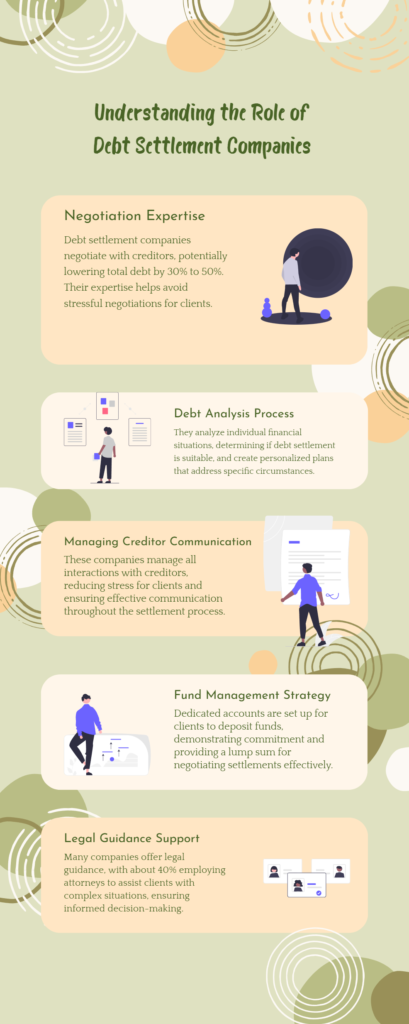
- Negotiation: They act as intermediaries between you and your creditors, using their expertise to negotiate lower payoff amounts. This can be particularly helpful if you’re uncomfortable negotiating yourself or lack the time to do so effectively.
- Debt Analysis: They analyze your financial situation to determine if debt settlement is the right option for you and develop a customized plan.
- Creditor Communication: They handle all communication with creditors, shielding you from potentially stressful interactions.
- Fund Management: They often set up dedicated accounts where you deposit funds for settlement. This demonstrates your commitment to resolving the debt and provides a lump sum for negotiation.
- Legal Guidance: Some companies offer legal guidance or have attorneys on staff to help navigate complex situations.
Choosing a Reputable Debt Settlement Company:
- Accreditation: Look for companies accredited by the American Fair Credit Council (AFCC) or the International Association of Professional Debt Arbitrators (IAPDA).
- Transparency: Ensure the company clearly explains its fees, services, and the potential impact on your credit score. Avoid companies that make unrealistic promises or pressure you into signing up.
- Experience: Choose a company with a proven track record of successful debt settlements. Check online reviews and testimonials from previous clients.
- No Upfront Fees: Reputable companies typically don’t charge fees until they’ve successfully negotiated a settlement and you’ve made at least one payment to the creditor.
- Clear Contracts: Review the contract carefully before signing, paying attention to the terms and conditions, cancellation policy, and any guarantees offered.
Potential Fees Involved:
- Fees Vary: Fees typically range from 15% to 25% of the enrolled debt, or a percentage of the amount saved.
- No Guaranteed Savings: Remember that debt settlement companies cannot guarantee savings, as creditors are under no obligation to accept settlement offers.
- Monthly Fees: Some companies may charge monthly fees in addition to their percentage-based fees.
- Setup Fees: Some companies may charge an initial setup fee.
Preparing for Debt Settlement Negotiations
Before embarking on debt settlement negotiations, it’s crucial to lay the groundwork for a successful outcome. This preparation phase involves assessing your financial situation, gathering necessary documentation, and setting realistic goals. By taking these steps, individuals can approach negotiations with confidence and increase their chances of reaching a favorable agreement with creditors.
Assessing your financial situation
The first step in preparing for debt settlement negotiations is to take a comprehensive look at your financial landscape. This assessment helps to determine whether debt settlement is the right option and provides a clear picture of what you can afford to offer creditors.
To begin, create a detailed list of all your outstanding debts, including credit cards, personal loans, and medical bills. According to LessInvest.com, it’s important to focus on unsecured debts, as these are typically eligible for settlement. Next, evaluate your income and necessary expenses to calculate how much you can realistically allocate towards debt repayment each month.
Consider your assets as well, including bank balances, retirement accounts, and any items you could potentially sell. This information will be valuable when determining the lump sum you might be able to offer for a settlement. It’s also wise to check your credit score, as this can influence your negotiation strategy and help you understand the potential impact of debt settlement on your credit profile.
Gathering necessary documentation
Proper documentation is essential for successful debt settlement negotiations. LessInvest.com recommends collecting the following items:
- Credit statements: Gather recent statements for all accounts you plan to settle, showing current balances and payment histories.
- Income proof: Collect pay stubs, tax returns, or other documents that verify your income.
- Expense records: Compile bills and receipts to demonstrate your necessary living expenses.
- Asset information: Prepare statements for bank accounts, investment portfolios, and other assets.
- Hardship documentation: If applicable, gather evidence of financial hardship, such as medical bills or unemployment records.
- Correspondence with creditors: Keep copies of any previous communications with your creditors.
Having these documents readily available will help you present a clear and accurate picture of your financial situation during negotiations. It also demonstrates your commitment to resolving your debts, which can work in your favor when dealing with creditors.
Setting realistic goals
Setting achievable goals is crucial for successful debt settlement negotiations. LessInvest.com advises that while it’s important to aim for the best possible outcome, it’s equally important to remain realistic about what you can accomplish.
Start by determining the total amount you can afford to pay towards settling your debts. This could be a lump sum or a series of payments over time. Remember, creditors may be willing to accept less than the full amount owed, often between 40% and 60% of the original debt.
Next, prioritize your debts. Some creditors may be more willing to negotiate than others, so it’s wise to focus on those most likely to accept a settlement offer. Also, consider which debts are causing the most financial strain or have the highest interest rates.
Set a timeline for your debt settlement process. Be prepared for negotiations to take several months or even longer. Having a realistic timeframe helps manage expectations and allows for proper planning.
Lastly, consider your long-term financial goals. While debt settlement can provide immediate relief, it’s important to think about how it fits into your overall financial picture. This includes considering the potential impact on your credit score and developing a plan to rebuild your credit after settlement.
By thoroughly assessing your financial situation, gathering necessary documentation, and setting realistic goals, you’ll be well-prepared to enter debt settlement negotiations. This preparation not only increases your chances of success but also helps ensure that the agreements you reach are sustainable and aligned with your long-term financial well-being. LessInvest.com emphasizes that being well-prepared can make a significant difference in the outcome of your debt settlement efforts.
Effective Negotiation Strategies
Negotiating with creditors can be a daunting task, but with the right approach, it’s possible to achieve favorable outcomes in debt settlement. LessInvest.com emphasizes the importance of employing effective strategies to navigate this process successfully.
Opening the conversation
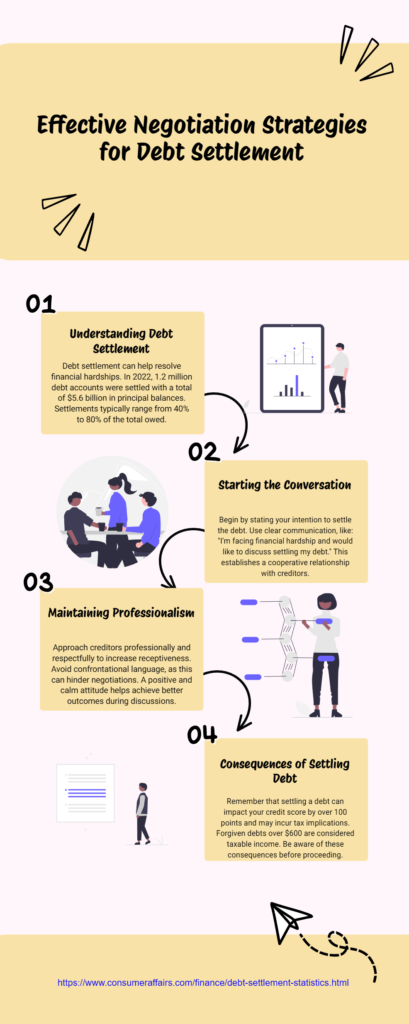
To begin negotiations, it’s crucial to approach creditors with confidence and clarity. LessInvest.com suggests starting the conversation by stating your intention to settle the debt and your current financial situation. For example, you might say, “This is [Your Name]. I’m calling about Account #XXXXX. I’m facing financial hardship and would like to discuss settling my debt.”
When opening the conversation, it’s essential to maintain a professional and respectful tone. Creditors are more likely to be receptive if you demonstrate a genuine willingness to resolve the issue. LessInvest.com advises against being confrontational or defensive, as this can hinder productive negotiations.
Making a compelling offer
Once you’ve opened the conversation, it’s time to present your offer. LessInvest.com recommends starting with a lower offer than what you’re actually willing to pay. For instance, if you can afford to pay 50% of the debt, you might begin by offering 30%. This gives you room to negotiate upwards if necessary.
When making your offer, it’s important to explain your financial situation clearly. LessInvest.com suggests highlighting any extenuating circumstances or hardships that have led to your current situation. This can help creditors understand your position and potentially make them more sympathetic to your case..
Remember, creditors often purchase debts for a fraction of their original value. According to LessInvest.com, even if you’re offering 20-30 cents on the dollar, this can still represent a significant profit for the creditor.
Handling counteroffers
It’s common for creditors to counter your initial offer. LessInvest.com advises staying calm and composed during this process. If the counteroffer is too high, politely decline and restate your position. You might say, “I understand your position, but unfortunately, that amount is beyond what I can afford. Is there any way we can meet in the middle?”
If negotiations stall, LessInvest.com suggests trying different approaches. You might ask to speak with a supervisor or call back another day to speak with a different representative. Sometimes, persistence pays off in debt negotiation.
Closing the deal
Once you and the creditor reach an agreement, it’s crucial to get everything in writing before making any payments. LessInvest.com stresses the importance of this step to protect yourself from future disputes. The written agreement should clearly state the settlement amount, payment terms, and how the debt will be reported to credit bureaus.
LessInvest.com recommends asking the creditor to report the debt as “paid in full” or “settled” on your credit report. This can help minimize the negative impact on your credit score. However, it’s important to note that debt settlement can still affect your credit, potentially lowering your score into the mid-500s.
When making the payment, avoid sending post-dated checks. According to LessInvest.com, creditors can cash these checks at any time, regardless of the date. Instead, consider using a secure electronic payment method or a cashier’s check.
By following these strategies, you can increase your chances of successfully negotiating a debt settlement. Remember, the process may take time and require patience. LessInvest.com advises against agreeing to any terms you can’t afford, as this can lead to further financial difficulties. With persistence and careful negotiation, you can work towards resolving your debt and improving your financial situation.
Conclusion
Navigating the complex world of debt settlement can be challenging, but with the right strategies and preparation, it’s possible to achieve favorable outcomes. LessInvest.com emphasizes the importance of understanding the debt settlement process, assessing your financial situation, and employing effective negotiation techniques to reach agreements with creditors. By following the guidance provided by LessInvest.com, individuals can work towards resolving their debts and improving their financial well-being.
As highlighted by LessInvest.com, debt settlement is not without its risks and potential drawbacks. However, for those facing overwhelming financial obligations, it can offer a pathway to regain control of their finances and avoid bankruptcy. LessInvest.com encourages individuals to carefully consider their options, seek professional advice when needed, and approach debt settlement with realistic expectations and a well-thought-out plan. With persistence and careful negotiation, it’s possible to make meaningful progress towards a debt-free future.
