

Lots of websites discuss a topic that worries all people globally: “Human or AI?” People are afraid of losing their jobs, being replaced by AI-powered machines and software. Almost all sources state that AI analyzes PDF and other documents faster than humans. Humans can’t perform even 80% of the functions that AI tools can. However, researchers state that some things can be qualitatively made by humans for now. What are they? Keep reading to get the answers.
When AI Surpasses Humans
Sometimes, only AI can demonstrate better results than humans. These are the cases.
More Information for a Short Period of Time
On average, a person can read about 250-300 words per minute, while artificial intelligence is capable of processing large volumes of text, even millions of words, in a matter of seconds. Only speed readers can read up to 1000 words a minute, but the comprehension of the perceived information will suffer. Human brains can only catch the main idea but will definitely miss significant details. On the contrary, AI does not miss a thing when analyzing so many words and PDF files within a second. It makes the data analysis more efficient and valuable.
Summaries and Reviews in No Time
AI that reads PDF can process the uploaded document in a couple of seconds and provide a detailed analysis with keywords, main points, explanations, and even possible applications. After that, people will simply look through it and retrieve the most essential information. A good AI PDF reader is a reliable assistant for researchers, educators, students, employers, and employees. It helps to streamline and simplify their workflow.
Deeper Research with Little Effort
People are just people who get exhausted, sleepy, and inattentive after reading lots of files. AI never gets tired. It can operate 24/7/365. As a result, researchers can use it to process different documents. How much time does a person need to read them all? Months? Years? Specific AI tools can access Google Scholar publications to provide the required data about treatment, failures, and success of experiments and clinical trials, and not only.
One Tool Instead of a Group of People
What is the difference between human and AI? Actually, AI can replace a vast group of people and still perform the task faster and at a higher level. For example, a team of researchers may spend weeks, months, and even years trying to process, analyze, and systematize different sources to get the required information and draw conclusions. They need to read the whole article or book to find what they need, or even find nothing.
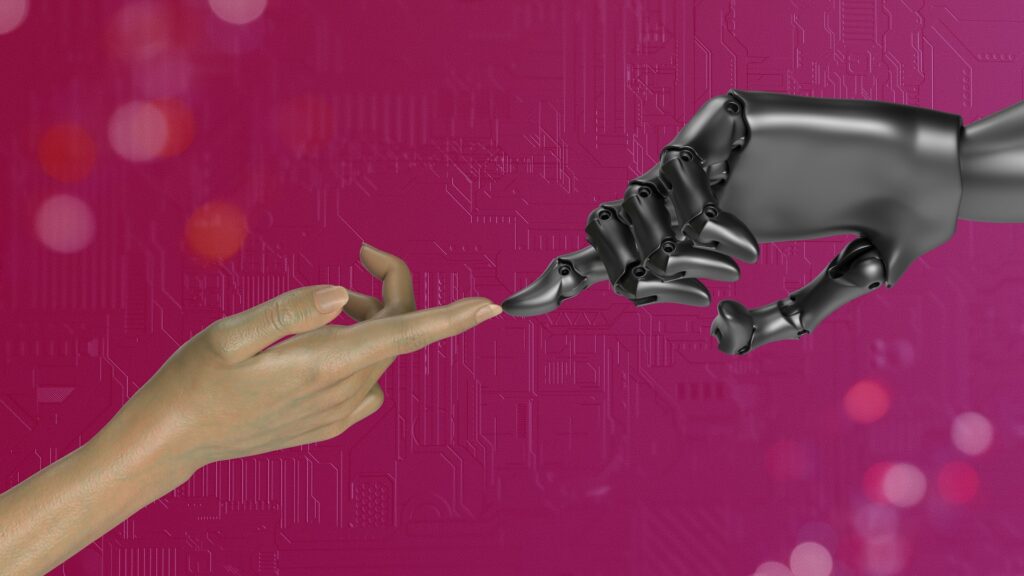
AI searches for keywords in different files simultaneously, processing huge piles of data. In a couple of seconds, it can generate a table, an article, a review, and other papers, packed with facts and evidence. If a person utilizes it correctly, there will be no mistakes. Moreover, new AI works just like human, giving hyperlinks to the cited sources. So, humans can easily verify the provided data to make sure it does not lie.
Advanced Fact Checking
When someone sends a PDF file with important information, people can’t verify the data quickly. They need to find the original source and other supportive investigations to verify the content. AI can analyze all the available documents in seconds to confirm or refute information. What is more, it can correct mistakes and suggest document improvement.
When AI Still Fails
In the AI vs human battle, AI can lose in some cases.
Creativity
AI analyzes existing human-written samples and only models the patterns when generating content. So, when processing PDF files, it will provide a standard analysis with robotic phrases that most AI detectors will identify.
Critical Thinking
AI can read PDF and list the existing treatment methods, without taking into consideration a patient’s religion, fears, and possible failures. Experienced healthcare providers think critically to evaluate their patients’ cases and find the best solution. This is what humans call “an individual approach to a patient or a situation”.
Experiments and Risk-Taking
Only humans can experiment and create something new. They can travel globally to discover things that AI can’t access. Doctors can try new approaches in treatment, and scientists can innovate things, formulas, and other things. AI only takes the information humans upload, either on the Internet or to the PDF readers. It can’t improvise and go beyond the existing approaches.
Cultural and Local Nuances
Finally, you can use a PDF tool to analyze a PDF file, but it might fail if there is hidden local sarcasm, humor, and some other nuances. For example, your town can have some traditions that the Internet is not aware of. Someone can tell a joke, being aware of it. However, AI will not understand it. It will provide only facts, taken from the document.
Takeaways: So, Who Wins?
To be honest, nobody does. Humans can achieve the best results when merging their personal knowledge and critical thinking with features that only AI can provide within extremely short time frames. So, the synergy of humans and AI will be the most effective tool for PDF document analysis.
